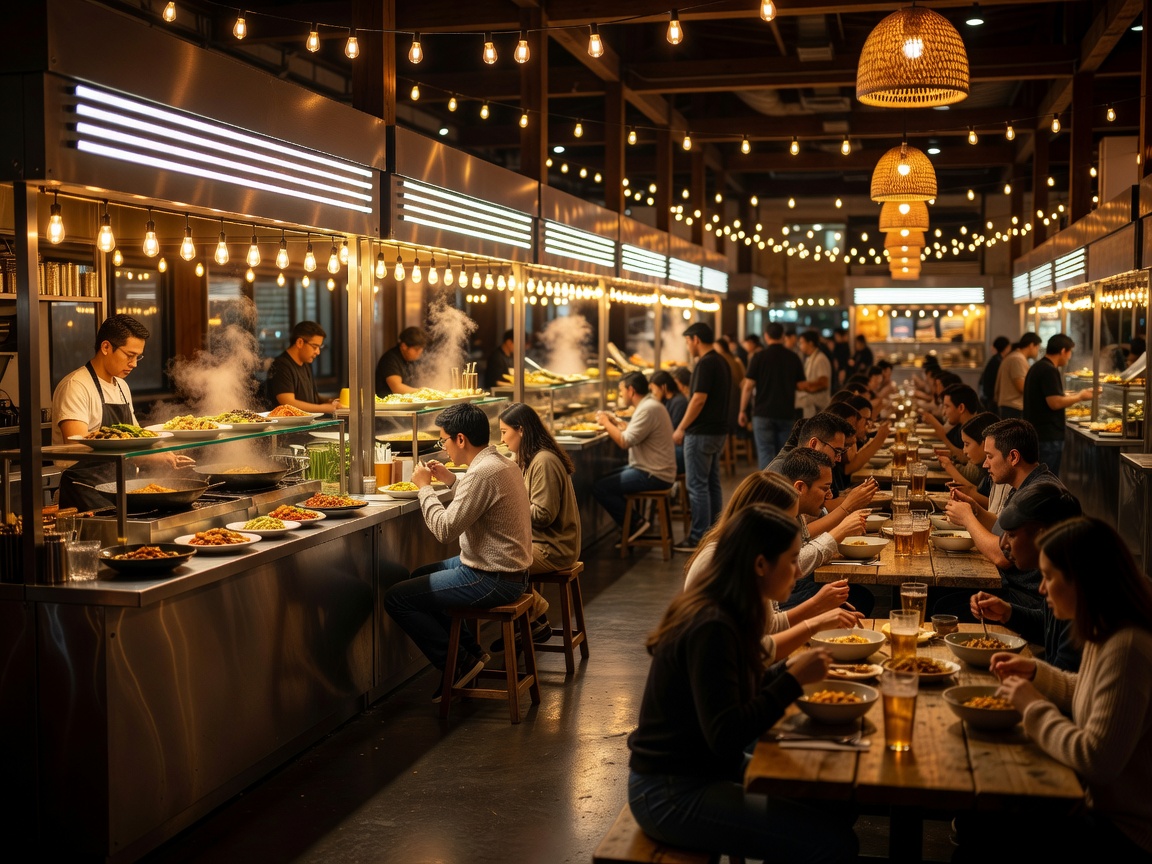
First, what do we mean by a night market?
The phrase covers a range of places. A night market might be a designated lane of temporary stalls, a permanent covered market that stays lively after sunset, a street with clusters of food vendors, or part of a broader evening shopping district. Some are organized around local residents’ everyday needs; others are well-known visitor destinations. A hawker centre, by contrast, is a shared dining complex with independent food counters and communal seating. It may be busy at night, but it is not automatically a night market.
That distinction matters because layouts, opening patterns, facilities and rules are set locally. Even within one city, one market may have fixed counters while another changes from day to day. Treat the name as a starting point, not a promise of a particular experience.
Read the layout before choosing dinner
Give yourself a few minutes to look around. Some places have a clear route through rows of stalls; others are a maze of lanes, indoor halls and adjacent shopping streets. Food might be ordered at the counter and collected when ready, paid for at a separate cashier, or eaten at tables managed by a neighbouring vendor. Follow visible local cues and posted instructions rather than assuming one system applies everywhere.
A useful first lap can help you compare menus, see where people queue and spot seating. When a market is crowded, avoid stopping in a narrow walkway to decide. Step aside, keep bags close and leave room for staff carrying hot dishes. If a seat is shared, ask politely before settling in and be ready to make space when it gets busy.
Ordering, paying and sharing tables
Payment varies by market and stall. Cash may be useful, while some vendors accept cards, mobile wallets or market-specific payment methods. Don’t assume that a foreign payment app will work, and don’t assume a stall is cash-only either. Check signs, carry a practical backup and keep payment conversations clear. If you’re unsure how to order, point to a displayed dish and ask the vendor to confirm the name, ingredients or portion.
Queues may form in a line, around a counter or through a number system. Look for the local pattern before joining. Have your order ready when you reach the front, but there’s no need to rush a vendor who is cooking. Shared tables are common in some settings and absent in others. Keep your belongings compact and clear used dishes when that is the local custom.
Choosing food with care
Follow your appetite, but take a moment to notice how food is prepared and held. Some dishes are cooked to order; others are prepared in batches. You can ask what an unfamiliar item contains, whether a dish includes meat, seafood, eggs, dairy, nuts or a particular sauce, and whether an ingredient can be left out. Recipes and kitchen practices vary, so a vendor may not be able to accommodate every request.
For a serious allergy, communicate directly and clearly. Translation cards can help with language barriers, but they cannot eliminate cross-contact risks. Don’t assume a dish is allergen-free because an ingredient is not visible. People with significant allergies should make their own informed decisions and follow their personal medical guidance.
Comfort, access and planning
Markets can be noisy, hot, crowded and difficult to navigate with a stroller or mobility aid. Surfaces, routes, toilets, seating and step-free access differ considerably. If access needs are important, look for current information from the market or local authorities before setting out. Visiting earlier in an evening may be calmer at some places, but hours and crowd patterns vary; verify current opening information rather than relying on a general rule.
For children or groups, agree on a meeting point, keep the group together and take turns ordering if counter space is tight. Check how you’ll get home before the last train or local transport service, and use well-lit, established routes. Keep valuables secure without letting safety worries overshadow ordinary common sense.
Good for
- First-time visitors who want to understand different market formats.
- Food-minded travellers comparing stalls before ordering.
- Groups who need a simple plan for seating, transport and communication.
What to know
- Opening schedules, payment methods, accessibility and local etiquette are market-specific.
- Ask about ingredients; vendors cannot guarantee that food is allergen-free.
- Carry a payment backup and check current transport and market information.
A short, useful checklist
Before you go, check whether the place is a street market, covered hall or hawker centre; confirm current hours through a reliable local source; plan a return route; and bring a payment method that suits the destination. At the market, observe queues, keep paths clear, ask concise questions and dispose of waste thoughtfully. If a stall is busy, patience is part of the transaction.
Most of all, let the market be a place rather than a checklist. Not every stall needs to become a photograph or a personal challenge. A little curiosity, basic courtesy and room in your evening usually make for a more rewarding visit.