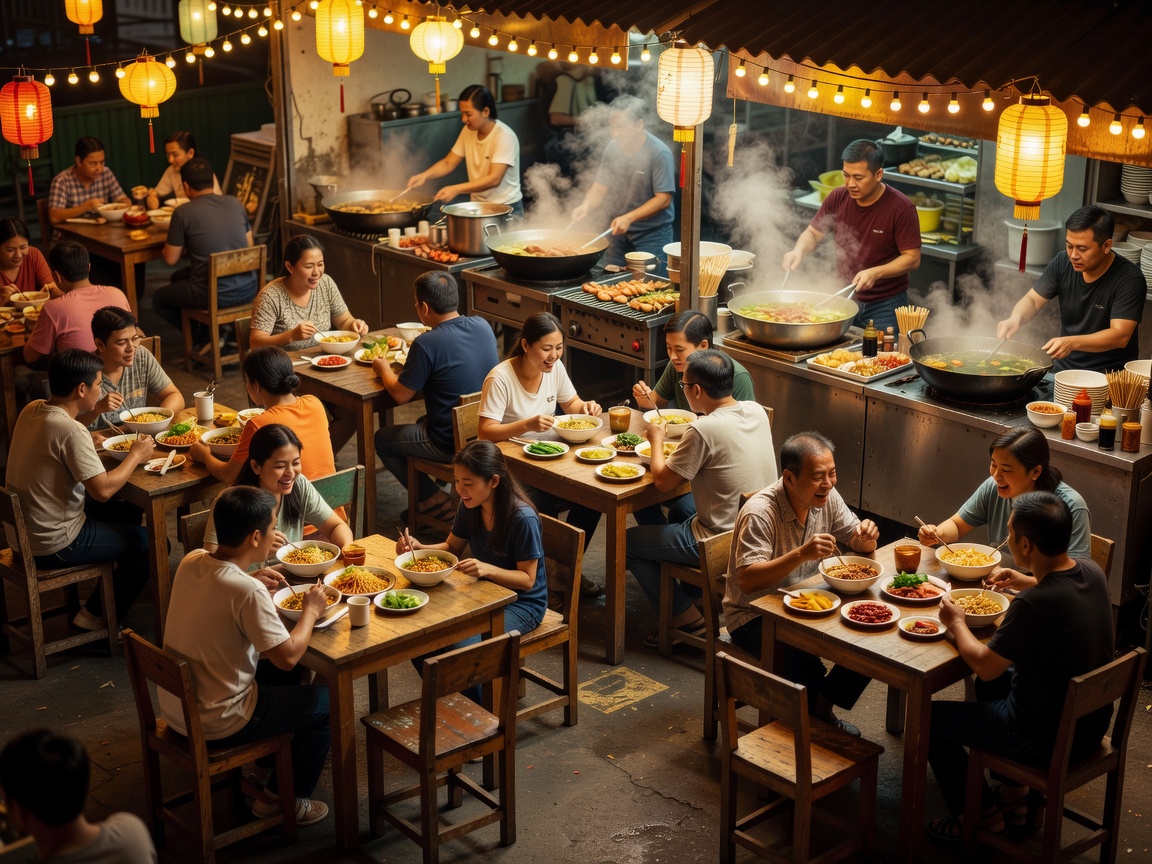
Taipei: night-market routes and snack variety
Taipei is often associated with night markets, including Shilin and Raohe Street. These are distinct market settings rather than interchangeable names for one experience. Visitors may find prepared snacks, shopping and lively pedestrian routes, with crowds and stall offerings varying over time. Use current city information to check access, local conditions and opening arrangements. Cash and electronic payment options differ between vendors; carrying a backup is sensible.
Food orders may be placed at a counter, and queues can move quickly. If you have an allergy or dietary restriction, ask about sauces, fillings and shared cooking surfaces. Mandarin is widely useful, though menus and communication practices vary by place. Translation tools can assist but are not a substitute for clear allergy communication.
Tokyo and Osaka: food lanes, shops and districts
Tokyo offers many food settings, from neighborhood shops and market streets to specialized dining alleys. It should not be reduced to a single “night market” format. Osaka’s Dotonbori is a prominent commercial dining and entertainment district, while other parts of the city have different local food rhythms. Visitors may encounter noodles, grilled foods, snacks and specialist shops, but menus and availability depend on individual businesses.
Public transport is extensive in major urban areas, but station exits, walking routes and last-service times deserve attention. Check current transit information rather than assuming a route runs late. Some narrow streets are busy, so avoid stopping in the flow to read a map. Japanese-language menus may include helpful photos, but confirm ingredients when dietary needs matter.
Seoul and Busan: covered markets and regional specialties
Seoul’s food landscape includes covered markets such as Gwangjang Market, as well as restaurants, street-facing counters and other neighborhood formats. Busan’s Jagalchi Market is associated with seafood and market dining. These examples show why a market visit can involve both food shopping and prepared meals. Ask how ordering and seating work before assuming the process is the same at every counter.
Subway and bus networks make many districts accessible, though routes, transfers and crowd conditions vary by time. Korean menus may be unfamiliar to visitors; learn a few ingredient terms or use a translation aid, and ask about broth, sauces and shared side dishes if needed. Popular areas can be busy, so allow extra time and follow posted local guidance.
Bangkok: street food and many ways to eat
Bangkok’s food culture spans street-facing vendors, markets, malls, restaurants and neighborhood shops. Chatuchak is widely known as a weekend market and is not best described simply as a night market. Other evening food areas have their own formats and schedules, which can change. Visitors may encounter grilled foods, noodle dishes, rice meals, sweets and drinks, but there is no single dish list that defines the city.
Traffic can make short journeys take longer than expected. Use current local transit information, consider walking routes and plan a return journey. Payment options vary by stall. For dietary communication, ask about fish sauce, shrimp paste, broths and cooking equipment where relevant; a dish’s appearance may not reveal its full ingredients.
Singapore and Kuala Lumpur: shared-seat food centres and food streets
Singapore’s hawker centres bring independent stalls together around shared seating. Lau Pa Sat is one identifiable example, but it represents a particular food-centre format rather than a temporary market lane. Kuala Lumpur’s Jalan Alor is a well-known dining street with evening activity; it is more useful to think of it as a food district than a traditional market. Both cities offer substantial culinary diversity shaped by multiple communities, histories and everyday routines.
Public transport can connect many food areas, but check current service schedules and accessible routes. English may be useful in many visitor settings, though communication differs by vendor. Food names and ingredients reflect distinct culinary traditions, so ask rather than assume. At shared-seat centres, follow local table practices and avoid occupying space longer than needed during peak periods.
Ho Chi Minh City and Hanoi: distinct urban food rhythms
Ho Chi Minh City has covered markets such as Ben Thanh as well as street-side dining and neighborhood food businesses. Hanoi’s food culture includes local markets, small eateries and street-facing counters. Neither city should be reduced to one night-market identity. Visitors may encounter noodle soups, rice dishes, grilled foods, breads and snacks, but availability and local customs differ by neighborhood and time of day.
Street conditions can be busy and uneven. Plan crossings carefully, choose transport using current local advice and consider walking distances in heat or rain. Vietnamese phrases or a translation app can help with ordering. Ask about herbs, sauces, broths and fish-based seasonings if they matter to your diet; vendors may not be able to accommodate every request.
Good for
- Travellers deciding what kind of food area suits their evening.
- Readers comparing market streets, covered markets and hawker centres.
- People who want useful planning prompts without invented schedules.
What to know
- Check official city, transport or market information for current schedules and access.
- Payment, language, crowding and accessibility vary by venue and time.
- Confirm ingredients directly; no guide can guarantee an allergen-free meal.
A flexible city-planning checklist
Choose one district rather than trying to cross an entire city for a list of famous bites. Check operating details from a reliable current source, map a transport option home and keep an alternative in mind. If you need step-free access or particular facilities, confirm those before travelling. For groups, agree on a meeting point and make room for slower walkers.
At the destination, observe how ordering, payment and seating work. Ask vendors clear questions, be respectful when photographing people and follow local rules. A little flexibility goes a long way: markets change, weather shifts and dinner may take longer than the map suggests. That’s not a failed plan. Sometimes it’s just dinner.