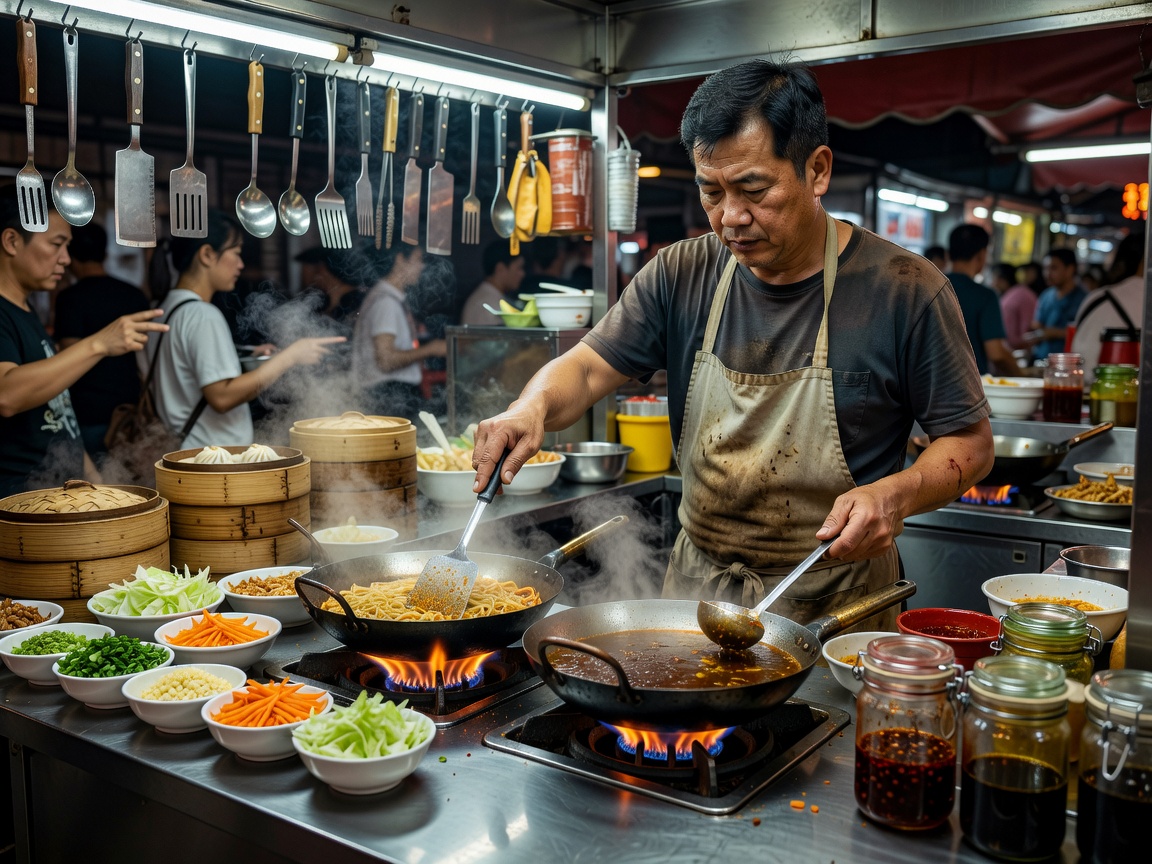
Vendors are skilled workers, not scenery
Street food is often described through a dish, but a vendor’s work includes much more: buying ingredients, preparing components, managing equipment, serving customers, cleaning and adapting to the rhythm of the street. Some businesses are family-run; others are operated by individuals, small teams or larger enterprises. Their histories and working conditions differ. It is better to ask about a specific place than to assume a single story applies across a city or country.
Food preparation can demand speed and judgment. A cook may balance a hot pan, keep several orders moving and respond to what customers ask for. The visible stall is only one part of a working day that may begin well before the first customer arrives. Respectful curiosity means treating vendors as people at work, not performers expected to entertain visitors.
Technique carries memory and adapts to change
Grilling, steaming, frying, fermenting and hand-preparing dough are practical skills as well as culinary traditions. A familiar method can connect a dish to local ingredients, household routines and learned technique. Recipes also change: cooks adjust to ingredient availability, customer preferences, changing costs, new equipment and the movement of people between regions. Adaptation does not automatically make a dish less authentic. Food has always been shaped by exchange and everyday decisions.
Take noodles as an example. Their ingredients, thickness, cooking method and accompaniments vary across places and kitchens. A cook’s timing may matter as much as the broth or sauce. The same broad category can hold many distinct local forms, each with its own context.
Markets support everyday dining
For residents, a food stall can be a quick breakfast, a late meal after work, a familiar lunch or a place to meet neighbours. Shared tables may create a practical communal space where different orders arrive at different times. In some places customers sit alongside strangers; elsewhere dining is mostly takeaway or organized around individual counters. Seating customs reflect local layouts and business practices rather than a universal market code.
Market conversation can be brief and efficient: a greeting, an order, a question about ingredients or a familiar exchange between a regular and a vendor. Visitors do not need to make a performance of being adventurous. A clear, polite question and a willingness to listen are usually better than treating the market as an attraction designed around outsiders.
Migration, ingredients and culinary exchange
City food cultures are rarely sealed off from movement. Migration, trade, travel and family ties carry ingredients and techniques across regions. A dish may have several versions, names or origin stories. Those variations do not need to be forced into one neat claim of ownership. The useful question is often how a particular version developed in a particular community, and how people prepare and understand it today.
Seasonal ingredients matter too. A market may reflect local harvests, coastal supply, climate and distribution networks. Fresh herbs, seafood, fruit and vegetables can shape what vendors serve, while preserved ingredients help create flavor throughout the year. Availability changes, so a dish’s ingredients may differ by season or supplier.
Urban change and the future of market food
Markets exist within cities that change. Transport projects, redevelopment, rent, sanitation rules, licensing and shifts in consumer habits can affect where and how vendors work. Regulation can support safe, accessible public spaces, but changes can also reshape who is able to trade and what kinds of businesses remain. These forces vary by location and are not reducible to a simple story of “tradition versus modernity.”
Visitors can contribute to a considerate atmosphere. Buy what you genuinely want, avoid blocking work areas and dispose of packaging responsibly. Ask before photographing a vendor or a close-up of their work; a person’s presence in a public place is not the same as permission to make them the subject of an image. Follow local rules and respect signs about photography.
Food safety and dietary questions
Food is prepared under many different conditions, and no guide can certify an individual stall. Notice how a vendor handles the food you plan to eat, ask about ingredients and make your own choices. People with allergies should communicate directly and clearly, including cross-contact concerns. A vendor may not be able to verify every ingredient or guarantee a separate preparation area. Vegetarian, vegan and religious dietary needs may require asking about broth, sauces, cooking fats and shared utensils.
Do not assume that a dish is suitable because it looks meat-free or because an ingredient is not visible. The recipe may include fish sauce, stock, dairy, egg or other components. Be courteous if a request cannot be accommodated.
Good for
- Readers curious about the work behind a market meal.
- People interested in food, migration and changing city neighbourhoods.
- Visitors who want to engage respectfully with vendors and local spaces.
What to know
- Vendor histories and market rules vary; avoid sweeping claims about a whole region.
- Ask before taking close photographs of people at work.
- Allergy and dietary suitability cannot be guaranteed by a guide or appearance alone.
A respectful visit begins with attention
Notice how the market works before deciding how to join in. Give space to queues and service counters, follow signs, ask direct questions and be patient when a vendor is busy. If a market is part of someone’s everyday neighbourhood, remember that residents are there to shop, eat and get home—not to provide an experience for visitors.
That small shift in perspective makes food culture easier to appreciate. The meal remains delicious, of course. But it becomes more interesting when you also notice the skilled hands, shared space and city routines around it.